In the beginning of this year armed forces of the Syrian Transitional Government (STG) started a military operation leading to the takeover of Kurdish neighborhoods in the city of Aleppo in North Syria. These actions were followed by a full scope invasion of the liberated areas of the Democratic Autonomous Administration of Northeast Syria (DAANES). At the time of this writing, the offensive is rapidly evolving. Tishreen Dam and Ayn Issa are under the control of the STG, with an advance toward Kobani. In the south the advance is going towards Hesekê, opening ISIS prisons along the way, freeing thousands of terrorists.
Why we are in Rojava
Imagining a full DAANES takeover by these groups feels like a nightmare for the people in the liberated region, particularly for all women and the Kurdish part of the population who do not fit in the nationalist narrative, just like it was for Druze down south and Alawites on the coast.
There is no point in poisoning our mind and beliefs with the worst potential scenarios. MSDN was born in Rojava, it was born in the place where the word “impossible” is cast away by imagination and practice. Despite difficulties and hardship, many times in the past decade of working here, we have seen that many people dream and more importantly, live free life.
It’s present in the way the people in the region treat each other, how they welcome guests, how they speak, how they fight, and especially how many never abandon the idea of freedom, a concept and practice so foundational for the entire culture.
Health is connected to everything in our lives. It is not simply a matter connected only to our physical body or our mind. Just as a human body is a dynamic system where health cannot be defined or measured by the quality of one part without understanding its relation to the entire structure, society is an organism and it needs to thrive in order for individuals to be healthy. Sometimes we need to change the angle from which we examine health and pose different questions.
How are we connected to people around us? Are we a part of a community? Do we feel a sense of society? Is our basic needs fulfilled? Can we act against injustice as an organism? Are we able to live life without fear of war, terror, imprisonment, torture, and death? Is there space to express our creativity? Do we have agency to shape our future?
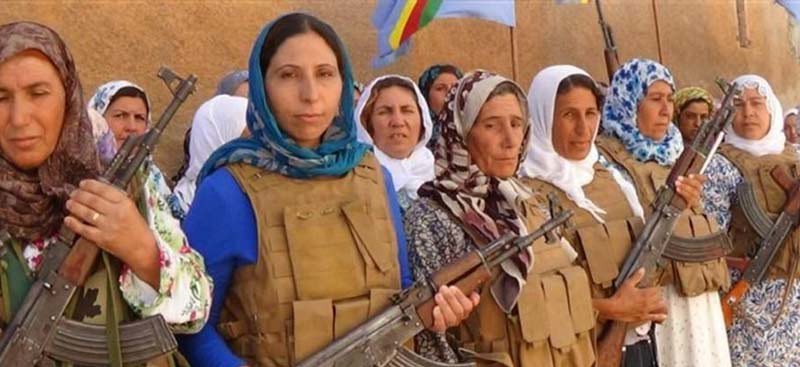
When we walked the streets of neighborhoods in Rojava, we’ve met grandmothers walking with kalashnikovs, assigned to protect the community. Their security and main martial art lies in the social connection. They know everyone, see to everyone’s needs, keep their house and table open for anyone while being the least corruptible and therefore the most respected element of communities.
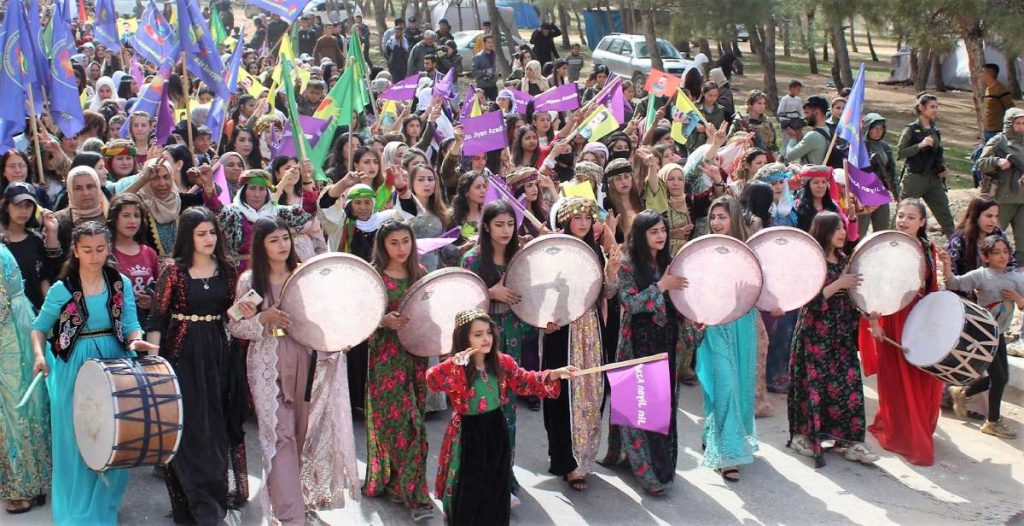
The situation unfolding in DAANES is a coming storm, inevitable, dangerous, and it must be taken seriously. Just like in many such moments, however difficult, people approach it with morale and smiles, songs and dancing. How our hearts feel is important as it impacts how we will fight and the outcome of the struggle. People remember how it was to live under jihadist occupation and Assad’s oppression, but they never lost track of what they want to build together.
They keep saying that the sacrifices today are not just for Northeast Syria or for the people there, but for everyone everywhere. Free life is not perceived as a utopia, but as a practice that exists in the present.
According to many standards, medics like us may learn better protocols elsewhere, however, we find this place to be a unique living proposal of people’s health, an organism empowered with social and political wisdom inherited over generations, empowered to heal and to defend itself.
We are here to contribute to that process and learn along the way from the everyday people around us. From the people who never lose their hope and free spirit. The Medical Self-Defense Network has been with the people in good times and we are dedicated to find beauty and liberating essence in the hardship as well.
Reminder of all possibilities of solidarity
A friend shared a story from their recent visit with a local family, where a 60 year old grandmother sang the song Our Heart Wants to Go on to Struggle. As she was singing her song, her son and grandson arrived, fleeing from Aleppo. They greeted each other after having survived the massacre with, of course, grief but also a lot of happiness; you could feel the sense of struggle between them. The 6 year old grandson said to them, “Berxwedan Jiyane” (meaning “Resistance is Life”).
The first way to support the survival of political ideas and resistance like what we see in DAANES is to remind yourself of the hope, courage, and commitment people like you have, and to put it in practice in your locality with the same dedication as the people in Northeast Syria. This contagious enthusiasm builds a culture which is the biggest antidote to the toxicity spread by authoritarian regimes.
Besides that, share the news, organize local events and demonstrations to support the people in DAANES. Follow call-outs and invitations to come over and join local structures with an open mind. Gather resources and skills and channel them in the right direction.
Be creative and courageous. Imagine and put what you imagine into practice.
“If we want to be victorious, we have to admit that our fight today is a fight for all or nothing. It is a time of bravery and decisions, a time of coordination and organization, it is a time of action. We send you all our bravery and willpower, we send you all our love. You, who fight with us and light the fires of resistance”
Șehîd Hêlîn Qaraçox
Footnotes
Armed forces of STG is an umbrella for various opposition groups mostly consisting of jihadist militias lead by HTS (Hay’at Tahrir al-Sham, former al-Nusra Front and al-Qaeda) and remands of ISIS and other jihadist armed groups.